Changing linguistic frontiers in Punjab
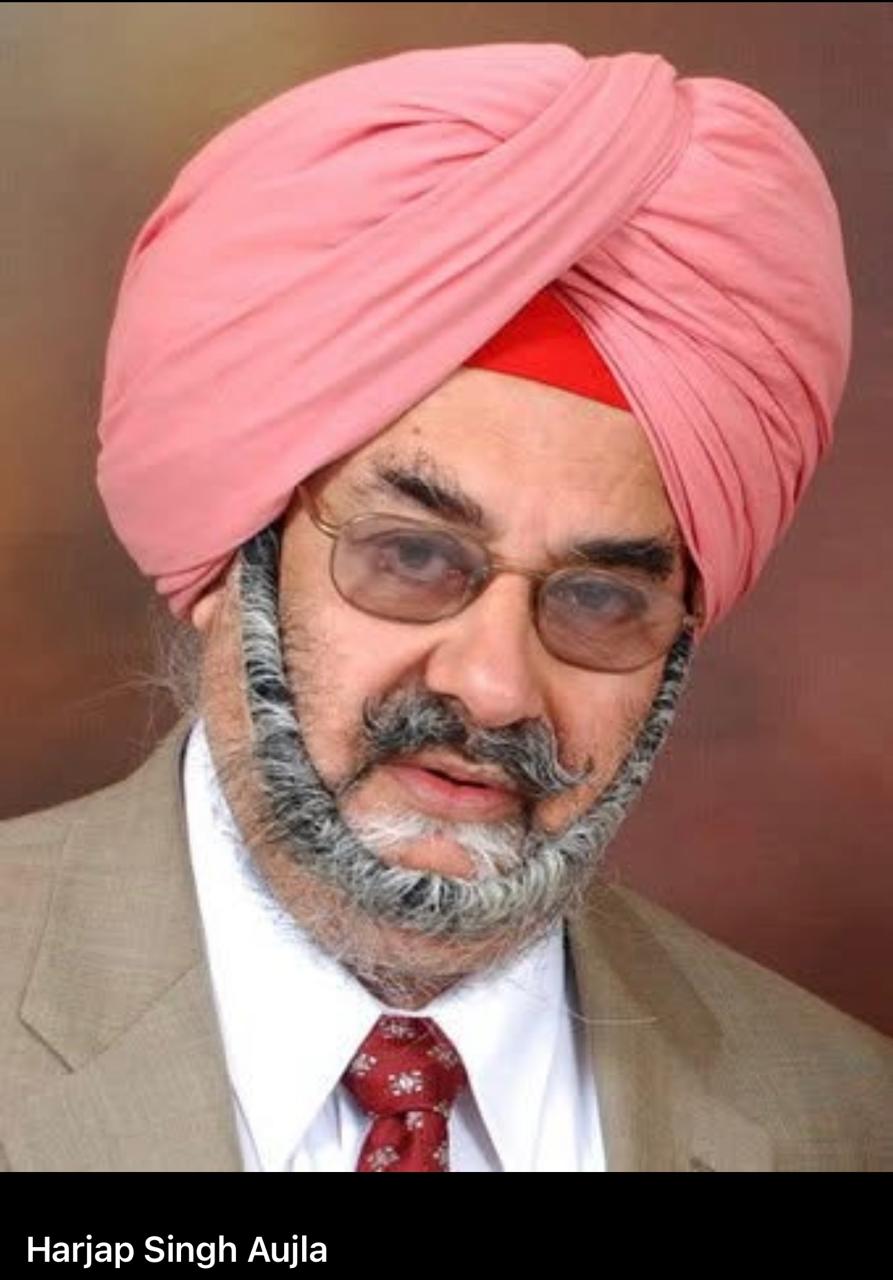
By Harjap Singh Aujla
Fact News Service: Punjab is a living, breathing example of a state — continuously reshaping itself in response to the challenges it encounters. This evolutionary spirit extends naturally to its dominant language. In and around the capital city of Chandigarh, the prevailing dialect is Puadhi Punjabi. Before 1947, Patiala spoke much the same dialect, enriched by a subtle fragrance of princely refinement woven into its vocabulary. In the courts and corridors of princely states, the casual infusion of Persian words into everyday speech was regarded as a hallmark of sophistication, and Patiala was no exception.
Linguistically, the vast pre-1966 Ambala district and the royal state of Patiala shared a common lexicon. For centuries, this quiet linguistic continuity held sway, especially among the unhurried rural masses, untouched by rapid change. Then history intervened with force. Beginning in March 1947, a tidal wave of shattered yet worldly Pothohari refugees—driven by hunger and upheaval—arrived in massive caravans from the once-prosperous Rawalpindi division. Their arrival ruptured the stillness. Puadh, long sheltered in its cocoon, was compelled to open itself to new influences and experiences. By August 1947, this transformation deepened further as the cream of Punjabi society—affluent Hindu and Sikh businessmen from the privileged Central (Lahore) division—joined the Rawalpindi caravans. Together, these migrations reshaped not only the social fabric of the region but also the cadence, character, and consciousness of its language.
The local Puadhi Muslim minority was also dislodged as cruelly by the local majority instigated by the incoming battle-scarred youth and middle-aged folks. Both Ambala Puadhi and its royal sophisticated variant in Patialvi Malvai came under intense pressure for cultural and linguistic transformation into an amalgam of Pothohari and Puadhi, which did happen with the passage of time. Urban Punjabi in the state capital region has undergone tremendous change with the new arrivals from Punjab’s most prosperous region. A decade after the dark days of communal strife, which led to savage killings of innocents on both sides and almost complete ethnic cleansing of minorities, the hard-working displaced population saw a semblance of return to their old prosperity. The scars of bloody exchange of population were too deep for some, like India’s world class sprinter Milkha Singh, who lost his father in front of his own eyes.
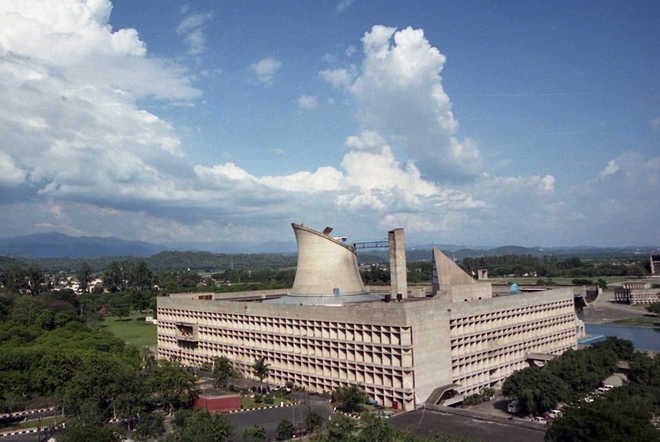
In 1956, the reorganisation of states on linguistic lines took place. As its fallout, the union of princely states called PEPSU (Patiala and East Punjab States Union), merged with its big brother East Punjab. Patiala lost its status as the capital of PEPSU. Simultaneously, the green city of Chandigarh, located in the heart of Puadh, in the foothills of the lower Himalayas, saw its slow germination. In a water-deficient barren area of district Ambala’s Kharar Tehsil, Chandigarh saw the slow development of the capital city, initially adopted by a few thousand strangers. As time elapsed, a flood of outsiders, including displaced Hindus and Sikhs started building dwellings, utility buildings, office complexes, schools and hospitals in the middle of the least productive agricultural belt of Punjab. This city’s planning and some unique features and natural drainage have become so attractive that people with deep pockets from all districts of Punjab, Himachal Pradesh, Jammu Kashmir, Uttar Pradesh, Uttarakhand, Delhi, Rajasthan and the Hindi region of East Punjab (now Haryana) started buying land and built-up real estate in Chandigarh city and its adjoining townships, Mohali and Panchkula. The grand boulevard-type peripheral roads of Chandigarh, like the Avenue of Capital, have been extended as far as needed, into the grid of Mohali. It has paid dividends.
During the days of the dreadful Covid -19 pandemic, the exodus of Punjabi settlers from the worst affected areas of New Delhi ended up in the industrial and commercial areas of Mohali. I have seen the new arrivals from the National Capital Region in Mohali speaking their re-polished ancestral Punjabi. Some retired West Punjabis are returning to Punjab. Linguistically and culturally, the tri-city area, called the state capital region, has become a regional cultural melting pot. Even the English language is not an alien in this region. Someday, a new composite language will develop, which will be the representative lingua franca of the region. The bureaucracy of Chandigarh union territory, way back in 1966-67, had adopted English as the official language, and it has been welcomed by the local population. Most good schools in Chandigarh teach English as the first language. English is also the dominant language in the Panjab University in Chandigarh. The engineering courses in the Punjab Engineering College (PEC) in Chandigarh are taught in English. The language of the elite is English. The dominant language at Chandigarh International Airport is English, although at the Bus Terminus and the Railway Station, Punjabi and Hindi are the dominant languages. At the All India Radio station in Chandigarh, Hindi is the dominant language. As long as the regional news in Punjabi were originating from Chandigarh, the majority of its news readers came from different regions of undivided Punjab, mostly from Pakistan, but they all were real professionals. Two of the pioneers, Mohinder Singh and Kiran Handa, were from Greater Ferozepore; both had an unblemished, smooth flow of words and impeccable choice of vocabulary. Later on, Amarjit Narang, Jaspal Singh Gulati, Pritam Singh Rupal and Bhupinder Singh Malik took the baton and performed creditably. If their performances are an indicator, our future is great.
Chandigarh has ultra-modern outlook armed with Lahore’s legendry prosperity. Most of the wealthy refugees from West Punjab, with big claims, from Multan and Rawalpindi divisions, could not be accommodated in East Punjab. A majority of them were packed like sardines in the NCR. Those urban Lahorias who had deep ties to the Golden Temple in Amritsar, could manage to settle in their second choice Amritsar city. Dr. Manmohan Singh’s family hailing from Jhelum district of Rawalpindi division chose to settle in Amritsar, and they did so successfully. Culturally, Amritsar was the second choice for the Lahore Punjabis, but the financial advantages of settling in India’s national capital lured them to Delhi. Up to 1971 census, the Punjabis were the dominant group in New Delhi. In the subsequent decades migration from the neighbouring states reduced their preeminance. Regarding the Punjabi refugees from Pakistan, the majority of rural folks of Lahore division barring those from Gujjranwala and Sheikhupura districts could manage to settle in the heavily Punjabi cultural region of Punjab.
In addition, the Lyallpur and Montgomery districts of Multan division were settled in heavily Punjabi speaking districts of Punjab. The rest had to lose their linguistic and cultural identity. Sialkot is the next-door neighbour of Gurdaspur and Lahore is at a whispering distance from Amritsar. The refugees from Sialkot were the first to cross into India using the Kartarpur Sahib – Dera Baba Nanak bridge over the Ravi. Some privileged ones like journalist, Kuldip Nayar could use the Wagha/Attari crossing on the Amritsar – Lahore Grand Trunk Road. The incoming Sialkotis flooded the tehsils of Batala, Ajnala and Gurdaspur; the overflow was adjusted in Bholath, Kapurthala and Sultanpur Lodhi tehsils of Kapurthala district. Others were settled in Dasuya tehsil of Hoshiarpur. Some were settled in the Jalandhar tehsil and Phagwara tehsil of Kapurthala. The urban Sialkotis were also quick in making up their mind and got settled in Gurdaspur, Batala, Kapurthala and Jalandhar. The East wards movement of Sialkotis moved the frontier of the Standard Punjabi language from the Eastern boundary of Gurdaspur and Amritsar to the towns of Kapurthala, Dasuya, Tanda and to Jalandhar. Since prior to independence in 1947 Jalandhar had a Muslim majority, their replacement by Sialkotia Hindu and Sikh urbanites has more or less transformed the local dialect of Jalandhar from Doabi to Central Punjabi. The most populous district of Lahore is the other prime mover of linguistic change in East Punjab. Rural Lahorias shared their border with Amritsar and Ferozepore and they arrived in both Amritsar and Ferozepur districts in huge numbers. Amritsar could not provide as many homes and tillable land to the incoming population; Kapurthala and Sultanpur Lodhi could accommodate some and they did. The remaining farmers were transferred to Ferozepore.
Before 1947, areas with a Muslim majority were, almost entirely, repopulated by rural Sikhs and Hindus after Partition. In percentage terms, Zira tehsil received the highest influx of rural allottees from Lahore. Ferozepore tehsil followed closely, absorbing the second-largest share of Lahore’s farming communities. Fazilka was settled by nearly 50 percent Lahorias, with Muktsar next in line, while Moga tehsil received the smallest number. A handful of Lahori rural families were also allotted land in villages of Jalandhar district.
The most profound impact of these rural Lahorias was felt in the language of Ferozepore. Within just a few years, the pre-1947 Ferozepuri Malvai gave way to Majha-Lahori Punjabi as the dominant dialect. From there, it spread steadily across the geographically largest district of the undivided province of Punjab, reshaping its linguistic landscape.
By contrast, the relocation of progressive and innovative farmers from Lyallpur and Montgomery districts left virtually no linguistic imprint on Punjab. They were largely resettled in or near their ancestral districts, allowing their speech patterns to blend seamlessly into familiar surroundings.
The story was different for the Sikhs of Nankana Sahib, who steadfastly refused to abandon the birthplace of Guru Nanak and were therefore among the last to leave Pakistan. Rural migrants from Sheikhupura and Gujranwala arrived in India relatively late and were accommodated in the old undivided districts of Karnal, Ambala, and Hissar—today’s Kurukshetra, Kaithal, Ambala, and Sirsa. In the Karnal region, these communities continue to exist as small islands of Punjabi culture, surrounded by a vast sea of Hindi.
Following the population exchange, both Amritsar and Gurdaspur emerged as purer Majha districts. Jalandhar became the new eastern frontier of Sialkoti (Central) Punjabi. Ludhiana, which initially received very few West Punjabi refugees, is now witnessing a fresh influx—this time of displaced industrialists from the once-dominant industrial hub of Amritsar.
It is therefore safe to conclude that the frontier of Standard (Central) Punjabi is steadily moving eastward. It has already taken root in Phagwara and Ludhiana, with perceptible changes underway in Mohali, Chandigarh, and Patiala. Meanwhile, Sangrur, Barnala, Bathinda, and Mansa continue to stand firm as largely unaffected citadels of Malwai Punjabi.
Leave a comment
Related News


FACT News TV
View AllBreaking News
View All
Dr. Baljit Kaur Hands Over Appointment Letters to 8 Newly...
February 20, 2026
Changing color of nails can indicate a serious disease.
February 20, 2026

Major Administrative Reshuffle in Punjab: 96 IAS & PCS Officers...
February 20, 2026
Advertisement

Editor’s Desk
View All

What led to the NDA victory in Bihar polls?
November 14, 2025
Punjab needs a comprehensive land-use policy
May 29, 2025