Chandigarh Mayor’s Five-Year Term Bill Faces Uncertain Future
Fact News Service
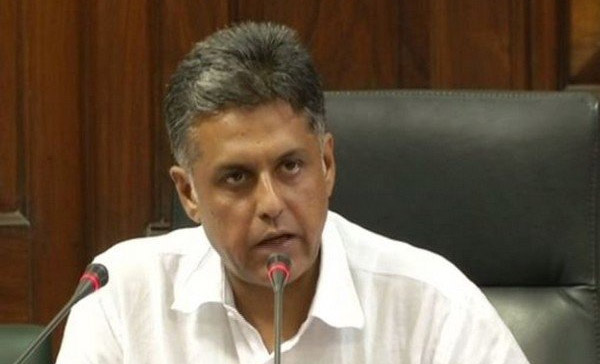
Chandigarh, December 23: Chandigarh MP Manish Tewari recently introduced a Private Member’s Bill in the Lok Sabha seeking sweeping reforms in the city’s civic governance, including a directly elected Mayor with a fixed five-year tenure and a major transfer of administrative powers from the UT Administrator to the elected Municipal Corporation.
The Bill — titled The Punjab Municipal Corporation Law (Extension to Chandigarh) Amendment Bill, 2025 — aims to end Chandigarh’s unique system of electing its Mayor, Senior Deputy Mayor and Deputy Mayor for a one-year term, a practice in place since the Municipal Corporation was constituted in 1994.
Under the proposed legislation, the Mayor and the two deputies would be directly elected by the voters of the Chandigarh parliamentary constituency and serve for five years, co-terminus with the term of the Municipal Corporation. The proposal would bring Chandigarh in line with most major cities governed under the Punjab Municipal Corporation Act, 1976, which provides five-year mayoral tenures.
Shift in Governance Powers
Beyond tenure reform, the Bill proposes far-reaching structural changes in the governance of the Union Territory. It seeks to replace the Administrator’s overriding authority in civic matters with that of a “duly elected Mayor” and introduce a Mayor-in-Council system to collectively exercise executive powers.
All civil officers of the Chandigarh Administration — except those dealing with law and order — would come under the Mayor-in-Council, while the Annual Confidential Reports of these officers would be written by the Mayor and the two deputies. The Bill also proposes an anti-defection provision for councillors and the top three civic posts, on the lines of the Tenth Schedule of the Constitution.
Tewari argued that the current one-year mayoral system leads to instability, political manoeuvring and disruption of long-term projects. The Bill states that frequent leadership changes “subvert the integrity of the democratic process,” cause policy discontinuity and result in waste of public resources.
While the Bill has been formally introduced in the Lok Sabha, it has not been passed and remains pending in Parliament. As a Private Member’s Bill, it does not have the backing of the Union Government and requires broad political support to proceed further — something it has not yet received.
The Bill has also faced procedural hurdles, having been listed for introduction on multiple occasions but delayed due to adjournments or lack of time during Private Members’ business.
Why the BJP Is Not Moving Forward
The BJP-led Centre’s reluctance to back the Bill is rooted primarily in governance and administrative control concerns. Chandigarh, being a Union Territory, is directly administered by the Centre through the UT Administrator, and the proposed amendments would significantly dilute the Administrator’s authority in favour of an elected civic leadership.
By transferring most civil functions — including control over officers and administrative reporting — to an elected Mayor, the Bill would fundamentally alter the power structure of the UT. The Centre has traditionally argued that such changes require careful consideration, given Chandigarh’s unique status as a shared capital and a centrally administered territory.
Politically, the proposal also carries implications for power equations at the local level. Direct mayoral elections and a fixed five-year tenure could strengthen the position of the elected civic body vis-à-vis the Centre, reducing the scope for administrative intervention — a shift the BJP has so far shown little appetite for.
For now, without government support, the Bill’s future remains uncertain. While it has reignited debate on democratic decentralisation in Chandigarh, its passage will depend on whether the Centre is willing to reconsider the balance of power between elected representatives and the UT administration.
Leave a comment
Related News




FACT News TV
View AllBreaking News
View All

Today’s hukamnama, Sri Darbar Sahib, Amritsar (27 February 2026)
February 27, 2026
Bhagwant Mann Govt to honour 14,100 women entrepreneurs across Punjab...
February 26, 2026
GURMEET KHUDIAN HANDS OVER 40 TABS TO SEED CERTIFICATION OFFICERS...
February 26, 2026
SAD rejects new SIT into 328 ‘swaroop’ case
February 26, 2026
Advertisement

Editor’s Desk
View All

What led to the NDA victory in Bihar polls?
November 14, 2025

Punjab needs a comprehensive land-use policy
May 29, 2025