Centre Zeroes In On Mann’s Dhuri Assembly Segment: Will BJP’s Development Push Yield Political Dividends in Punjab?
Fact News Service
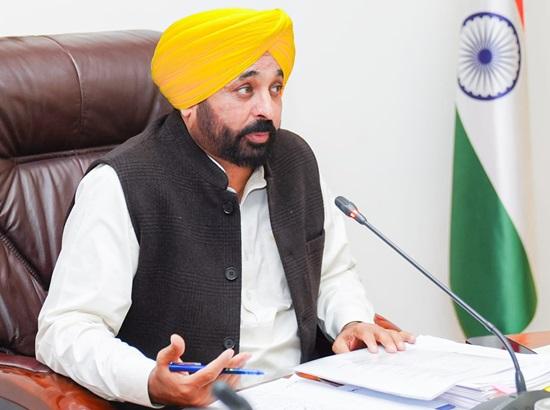
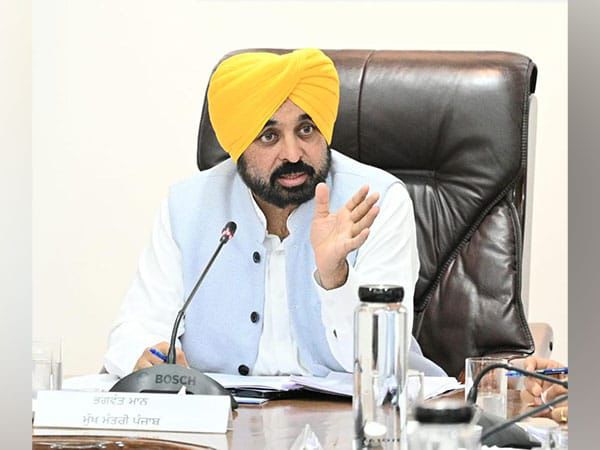
Chandigarh, December 24: The Centre’s decision to adopt Punjab Chief Minister Bhagwant Mann’s Assembly segment Dhuri under the Aspirational Blocks Programme has added a new political layer to the already fraught Centre–State relationship in Punjab. The move comes close on the heels of Mann’s sharp criticism of the BJP-led Union government for replacing the Mahatma Gandhi National Rural Employment Guarantee Act (MGNREGA) with the Viksit Bharat–Guarantee for Rozgar and Ajeevika Mission (Gramin), or G RAM G Act, which the Chief Minister has termed “anti-poor”.
Officially, the Department for Promotion of Industry and Internal Trade (DPIIT), under the Union Ministry of Commerce and Industry, maintains that the adoption of Dhuri is purely administrative and developmental. DPIIT Director Sumeet Jarangal, while chairing a high-level review meeting in Sangrur, stressed that the Aspirational Blocks Programme aims to integrate underdeveloped regions into the national mainstream by improving delivery of people-centric public services. Education, health, nutrition, employment, agriculture, drinking water, sanitation and digital services were highlighted as priority sectors, with clear instructions for measurable outcomes and strict monitoring.
Yet, politically, the symbolism of the Centre stepping into the Chief Minister’s own constituency cannot be ignored.
Bhagwant Mann represents Dhuri, a seat that has become synonymous with the Aam Aadmi Party’s (AAP) rise in Punjab. By focusing administrative attention on this block, the BJP appears keen to send a message: that development, resources and governance flow from the Centre, irrespective of political differences. For a party that has largely remained on the margins of Punjab’s electoral politics, such targeted interventions may be an attempt to build credibility on governance rather than ideology.
The BJP has long struggled to carve out an independent political space in Punjab, a state where regional parties and the Congress have dominated. Since the farmers’ agitation and the breakdown of its alliance with the Shiromani Akali Dal, the party’s footprint has further shrunk. In this context, development-driven outreach—especially in high-visibility constituencies like Dhuri—could be seen as a strategy to slowly rebuild relevance.
However, whether this approach will translate into political gains remains uncertain.
For one, Bhagwant Mann has already framed the Centre’s broader rural employment reforms as anti-poor, a narrative likely to resonate in agrarian Punjab. Any Central initiative in Dhuri will be closely scrutinised by the state government and AAP cadre, who may portray it as politically motivated rather than welfare-oriented. Mann’s emphasis on Punjab’s autonomy and his frequent confrontations with the Centre have helped consolidate his support base, particularly among voters wary of perceived Central overreach.
Moreover, voters in Punjab have historically differentiated between development delivery and electoral loyalty. Central schemes implemented under previous governments have not necessarily resulted in sustained support for the BJP at the ballot box. The party’s limited grassroots organisation in rural Punjab also constrains its ability to convert administrative visibility into political mobilisation.
That said, the Aspirational Blocks Programme does offer the BJP an opportunity to demonstrate effective governance. If tangible improvements in infrastructure, health services or employment generation become visible on the ground in Dhuri, it could blunt some of AAP’s criticism and complicate the Chief Minister’s narrative of Centre–state hostility.
In the short term, the move sharpens political optics rather than altering equations. In the long run, whether Dhuri becomes a showcase of cooperative development or a flashpoint of political one-upmanship will determine if the BJP’s targeted focus pays off in a state where political trust is earned slowly and lost quickly.
Leave a comment
Related News




FACT News TV
View AllBreaking News
View All


Advertisement

Editor’s Desk
View All
Op-ed: Strategic autonomy in a polarised world
March 1, 2026


What led to the NDA victory in Bihar polls?
November 14, 2025

Punjab needs a comprehensive land-use policy
May 29, 2025