Inside Story of India-US Trade Deal: How EU and UK Pacts Convinced Trump?
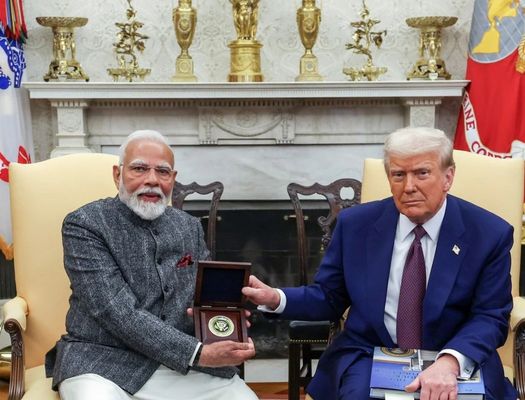
New Delhi, February 4, 2026: India’s foreign trade policy has undergone a revolutionary shift in the past year, sparking global discussions. Long-stalled Free Trade Agreements (FTAs) are now materializing and reshaping world geopolitics. The recent deal with US President Donald Trump stems from India’s savvy diplomacy, using EU and UK negotiations to pressure America.
Diplomatic Maneuver: Flipping the Game
India smartly shifted focus from multilateral to bilateral deals. As talks with the US stalled over Russian oil purchases and tariffs, India accelerated negotiations with the European Union (EU) and United Kingdom (UK).
EU’s Flexibility: Brussels officials softened their rigid terms upon seeing India’s growing US ties. This propelled the 18-year-old India-EU FTA forward, finalized on January 27.
Impact on Trump: Realizing India had secured access to European markets, the Trump administration feared US companies would lose out in India’s market. This FOMO (Fear Of Missing Out) pushed Trump to expedite the India-US deal.
Russian Oil and Tariff Standoff
The US threatened 25% secondary tariffs over India’s Russian oil imports, but India firmly prioritized energy security. Persistent talks by Foreign Minister S. Jaishankar and Commerce Minister Piyush Goyal, aided by intermediaries like Sergio Gor, resolved the impasse.
Broad Impact of the Deals
These agreements go beyond goods trade, covering modern areas:
-
Services and IPR: New opportunities for India’s IT and services sector.
-
Export Coverage: Two-thirds of India’s total exports now secured under these FTAs.
-
Local Industry Boost: Major impetus for agriculture, automobiles, and manufacturing under Make in India.
Conclusion
Amid a weakened WTO, India’s bilateral strategy proves a masterstroke. It demonstrates India’s ability to pursue national interests on equal footing, without yielding to superpower pressure.
Leave a comment
Related News




FACT News TV
View AllBreaking News
View All
Vigilance Bureau nabs Patwari red handed accepting bribe of Rs...
February 27, 2026
DAY 38 OF GANGSTRAN TE VAAR: PUNJAB POLICE CONDUCTS 515...
February 27, 2026
Biggest Victory of Truth and Honesty; Court’s Verdict a Slap...
February 27, 2026
Australia Women Crush India in 2nd ODI: Georgia Wolle’s Stormy...
February 27, 2026
Cure Grade 2 Fatty Liver Without Medicine: Doctor Shares 2...
February 27, 2026
Advertisement

Editor’s Desk
View All

What led to the NDA victory in Bihar polls?
November 14, 2025
Punjab needs a comprehensive land-use policy
May 29, 2025