Uddhav and Raj Thackeray Reunite: A New Chapter in Mumbai Civic Politics
Fact News Service
Chandigarh, December 24:
In a dramatic political development, the estranged Thackeray cousins—Uddhav Thackeray and Raj Thackeray—have announced their reunion, declaring a joint front in the upcoming Brihanmumbai Municipal Corporation (BMC) elections scheduled for January 15, 2026. The alliance signals a seismic shift in the city’s political landscape, emphasizing Marathi identity politics and reasserting the legacy of the Shiv Sena founder, Bal Thackeray.
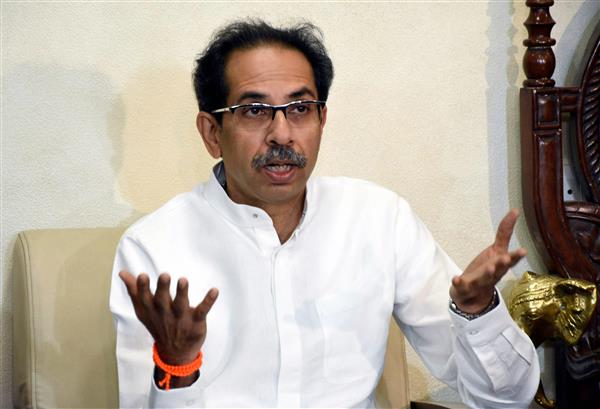
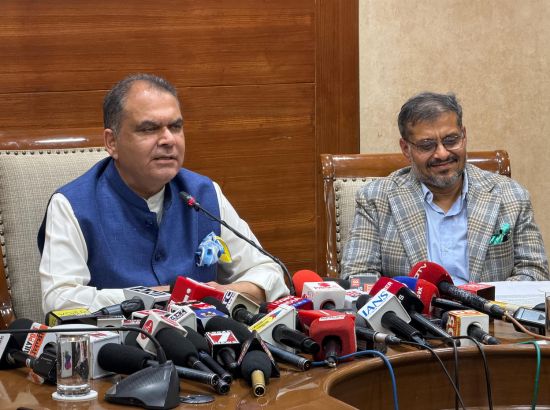
At a joint press conference, Raj Thackeray, chief of the Maharashtra Navnirman Sena (MNS), confirmed that Shiv Sena (UBT) and MNS will contest the elections as allies, asserting confidently that Mumbai would have a Marathi mayor representing their combined front. Sitting alongside him, Uddhav Thackeray echoed this sentiment, vowing to retain the city under their leadership, and criticized the current administration in Delhi for neglecting the city’s interests.
The cousins’ reunion is deeply symbolic, as it comes two decades after their split. To recall, the original Shiv Sena was founded in 1966 by Bal Thackeray, with a strong focus on the “sons of the soil” ideology, championing Marathi pride in Mumbai. Following internal differences after Bal Thackeray’s health declined, Raj Thackeray left the Shiv Sena in 2005, citing disagreements over leadership succession, ideology, and the influence of party politics on governance. In 2006, he formally launched the Maharashtra Navnirman Sena (MNS), aiming to recapture the Marathi vote bank, particularly among urban youth, which had gradually drifted from the Shiv Sena.
For 20 years, the cousins operated separately: Uddhav led the Shiv Sena (later Shiv Sena Uddhav Balasaheb Thackeray, or UBT), maintaining the loyalty of older cadre and Bal Thackeray’s traditional supporters, while Raj carved a niche with aggressive youth-centric campaigns and a vocal emphasis on Marathi identity, occasionally targeting non-Marathi migrants in Mumbai. The split diluted the Marathi vote and created a prolonged rivalry that fragmented the city’s regional politics.
Now, the historic reunion combines the strengths of both leaders. Uddhav brings political experience, organizational backing, and the symbolic legitimacy of being Bal Thackeray’s son, while Raj offers dynamism, youth appeal, and a proven ability to mobilize a crucial segment of the electorate. Together, they aim to consolidate the Marathi vote and challenge the ruling Shinde Sena-BJP coalition, which has dominated the city in recent years.
Reports indicate that seat-sharing arrangements have been tentatively agreed upon: Uddhav’s Shiv Sena is expected to contest 145–150 seats, Raj Thackeray’s MNS 65–70 seats, while a faction of the NCP led by Sharad Pawar may contest 10–12 remaining seats. This strategic allocation reflects a clear intent to maximize influence across the BMC’s 227 seats.
The cousins have also positioned this reunion as more than an electoral strategy. Uddhav’s remarks framed the alliance as a response to dissatisfaction among citizens with the Shinde-BJP government, calling for those disenchanted with the ruling coalition to join their front. Raj Thackeray emphasized a revival of Marathi identity politics, reiterating his uncle Bal Thackeray’s vision that Marathi people should have their due in the city’s governance. Sanjay Raut, Uddhav’s close aide, described the reunion as a “moment of joy” for Maharashtra, highlighting its potential to reshape civic leadership in Mumbai.
However, the reunion has been met with skepticism from the BJP. Chief Minister Devendra Fadnavis downplayed the impact of the alliance, alleging that the cousins have historically betrayed Mumbai. He accused them of having a record of corruption and exclusionary politics and claimed that both Marathi and non-Marathi residents might withhold support from them.
Strategically, the reunion is designed to merge two distinct voter bases: Uddhav’s loyalists and Raj’s younger, more aggressive Marathi electorate. This could hurt the Shinde faction of Shiv Sena, which has relied heavily on consolidating votes around the promise of stability under the Mahayuti government. By presenting a united “Thackeray Sena,” the cousins aim to shift the narrative from the fragmented question of “whose Shiv Sena is real” to a consolidated family-led leadership that claims the ideological legacy of Bal Thackeray.
In conclusion, the Uddhav-Raj Thackeray alliance represents a new era of identity-driven politics in Mumbai, seeking to capitalize on nostalgia for Bal Thackeray’s Shiv Sena while leveraging contemporary electoral strategies. With the BMC elections just a month away, their reunion could redefine political equations, challenging incumbents, and reshaping the Marathi vote’s influence in the city’s governance. Whether this strategic alliance translates into electoral victory remains to be seen, but it is certain that Mumbai’s political map will never be the same again.
Leave a comment
Related News


FACT News TV
View AllBreaking News
View AllAdvertisement

Editor’s Desk
View All
Op-ed: Strategic autonomy in a polarised world
March 1, 2026


What led to the NDA victory in Bihar polls?
November 14, 2025

Punjab needs a comprehensive land-use policy
May 29, 2025