Between 1 to 2 lakh Indians giving up citizenship. What’s the Reason?
Fact News Service
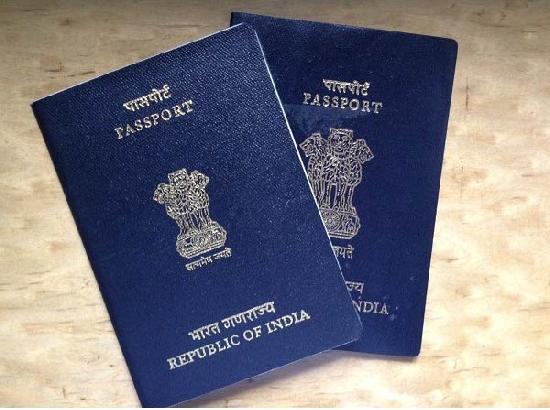
Chandigarh, December 18: For anyone leaving home for greener pastures, it is never an easy decision. Imagine leaving one’s country, that too, for good. But that is exactly what close to a million Indians have done in the last five years. Since 2020, over nine lakh Indians have renounced their citizenship. A pattern has emerged since 2022, with over two lakh individuals giving up their Indian passport every year.
This data was presented to Parliament during the ongoing Winter Session. It showed that 2.06 million (over 20 lakh) Indians gave up their citizenship between 2011 and 2024. Nearly half of this happened in the last five years, during and after the Covid-19 pandemic.
For almost a decade within these 14 years, annual figures stayed within a narrow bracket of 1.2 lakh to 1.45 lakh Indians renouncing their citizenship each year, before the trend shifted to over 2 lakh annually from 2022 onwards.
Responding to questions in the Lok Sabha, the Ministry of External Affairs stated in written replies that “the reasons are personal and known only to the individual” and that “many of them have chosen to take up foreign citizenship for reasons of personal convenience”.
The ministry also acknowledged that India “recognises the potential of the global workplace in an era of knowledge economy”.
This comes even as brain drain has been affecting India since the 1970s, and has only increased with each passing decade, peaking in the 2020s.
Unlike in the past, when Indians left either as indentured labourers under British rule, or as skilled professionals such as doctors and engineers migrating since the 1970s, it is now the wealthy who are fleeing the country, wrote former media advisor and spokesperson of the PMO, Sanjaya Baru, in his book ‘Secession of the Successful: The Flight Out of New India’.
Baru listed four phases of Indians emigrating, saying this is the fourth phase.
It is still in its incipient stage but has already acquired a high profile, he says.
It is the migration of the children of the wealthy as well as of high net worth individuals (HNIs) and the politically and socially powerful and influential elite the fourth wave, in many ways, amounts to a ‘secession of the successful’, wrote Baru.
Baru quoted data from Morgan Stanley, stating that around 23,000 Indian millionaires had left the country since 2014.
One reason Indians give up their passports for a more attractive US, UK, or Canadian passport is that India does not allow dual citizenship.
Social media platforms, from LinkedIn to Reddit, are full of posts by members of the Indian diaspora, where people have shared how difficult it was for them to give up their identity, the document that makes them an Indian citizen, the Indian passport.
Under Indian law, an Indian passport holder automatically loses citizenship upon voluntarily acquiring the citizenship of another country. For Indians who have lived and worked abroad for years, taking up foreign citizenship is often required to access full civic and professional rights.
Leave a comment
Related News



FACT News TV
View AllBreaking News
View All


Advertisement

Editor’s Desk
View All
Op-ed: Strategic autonomy in a polarised world
March 1, 2026


What led to the NDA victory in Bihar polls?
November 14, 2025

Punjab needs a comprehensive land-use policy
May 29, 2025